We Can Do Hard Things
Glennon Doyle and Audacy
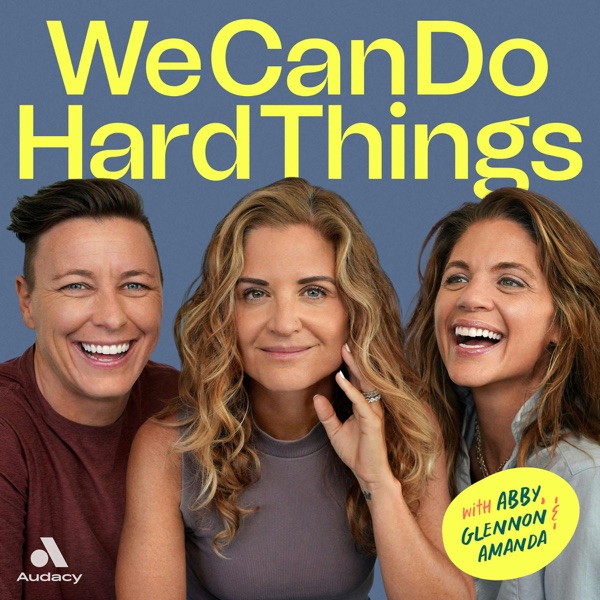
Come do life with Glennon Doyle, Abby Wambach, and Amanda Doyle. With more than half a billion plays, We Can Do Hard Things is a hilarious, raw, comforting “support system for braving the everyday.” The Pod Squad goes hard ($56 Million raised in global aid) and stays soft: meet here on Tuesdays to laugh, talk, and cry our way through the pain and magic of being human. Subscribe, Follow, and join our social media community here: https://linktr.ee/wecandohardthingsshow
Come do life with Glennon Doyle, Abby Wambach, and Amanda Doyle. With more than half a billion plays, We Can Do Hard Things is a hilarious, raw, comforting “support system for braving the everyday.” The Pod Squad goes hard ($56 Million raised in global aid) and stays soft: meet here on Tuesdays to laugh, talk, and cry our way through the pain and magic of being human. Subscribe, Follow, and join our social media community here: https://linktr.ee/wecandohardthingsshow
Do You Have a Father Wound? Find Out with Terri Cole
Episodios
Why do so many of us feel responsible for everyone else's happiness while struggling to believe we're enough? Psychotherapist and Father Wound author Terri Cole joins us to uncover how our relationships with our fathers shape our self-worth, relationships, and the roles we play long into adulthood—and how to finally break free. - The surprising signs you may have a father wound—even if you had a great dad. - Why perfectionism, people-pleasing, and hyper-independence may be rooted in childhood. - How we learn to earn love instead of simply receiving it. - Why so many women reach a breaking point in midlife. - How to stop managing everyone else and start living your own life. More with Terri Cole: Ep 402. Are You A High Functioning Codependent? Find Out with Terri Cole About Terri: Terri Cole is a licensed psychotherapist and global relationship and empowerment expert and the author of Boundary Boss and Too Much! For over two decades, Terri has worked with a diverse group of clients that includes everyone from stay-at-home moms to celebrities and Fortune 500 CEOs. She has a gift for making complex psychological concepts accessible and actionable so that clients and students achieve sustainable change. She inspires over a million people weekly through her blog, social media platform, signature courses, and her popular podcast, The Terri Cole Show. Her new book, Father Wound: Break Unhealthy Patterns to Reclaim Your Worth and Power, is available on November 17. Enroll in Terri’s course: Understand & Transform Your Father Wound. Follow We Can Do Hard Things on: Instagram — https://www.instagram.com/wecandohardthings
What does it look like to keep showing up when the world gives you every reason to disappear? Writer and artist Chanel Miller joins us for an unforgettable conversation about depression, healing, and her definition of success: refusing perfection and exhaustion, and continuing to show up as exactly who she is. - Chanel’s brilliant way of understanding depression: seeing life through “toilet paper roll binoculars”—and why we shouldn’t make big decisions when our vision has narrowed; - Why healing might sometimes be the permission to finally let go and move forward; - How Chanel learned that presence—not perfection—is success; - Why refusing to give up can itself be an act of resistance; and - The extraordinary moment Chanel returned to Stanford, was “held in sound,” and heard the message that set her free: We got it. You can go now. About Chanel: Chanel Miller is a writer and artist who received her BA in Literature from the University of California, Santa Barbara. Her critically acclaimed memoir, KNOW MY NAME, was a New York Times bestseller, a New York Times Book Review Notable Book, and a National Book Critics Circle Award winner, as well as a best book of 2019 in Time, the Washington Post, the Chicago Tribune, NPR, and People, among others. She is a 2019 Time Next 100 honoree and a 2016 Glamour Woman of the Year honoree under her pseudonym, “Emily Doe.” Follow We Can Do Hard Things on: Instagram — https://www.instagram.com/wecandohardthings
The most shocking thing about the Cornell and LSU sexual assault cases? That Cornell and LSU delivered more substantial results to those survivors than that afforded to 95% of college women brave enough to report their assaults to Universities. So what actually happens when a student reports a sexual assault to their university? Amanda sits down with sociologist and On the Wrong Side author Dr. Nicole Bedera—the researcher who spent a year embedded inside a university Title IX system—to pull back the curtain on the process we tell our kids to trust. They reveal: - How the vast majority of sexual assault reports lead to absolutely nothing; - The crucial difference between filing a report and a formal complaint; - The profound conflict of interest at the heart of a system run by the same institution whose reputation, liability, and finances are threatened by what it uncovers; - What specific questions we should ask to actually find out if a college is a safer place to send our child; and - Most importantly: If your child calls from college and tells you they have been sexually assaulted, who should you to talk to first, what specific things should you do, and what should you not do? This episode is for every parent with a child in college, every student heading there, and anyone who cares about keeping our children safe. About Nicole Bedera, Ph.D.: Nicole Bedera, Ph.D. is a sociologist and author of the book On the Wrong Side: How Universities Protect Perpetrators and Betray Survivors of Sexual Violence. Her research broadly focuses on how our social structures contribute to survivors’ trauma and make sexual violence more likely to occur in the future. Her work has been featured in many popular media outlets, including The New York Times, NPR, Time Magazine, and Teen Vogue. Nicole puts her work into practice as an affiliated educator at the Center for Institutional Courage, as a co-founder of Beyond Compliance Consulting, and as a co-founder of the nonprofit The Survivor Alumni Network. Read more from Nicole Bedera: https://slate.com/human-interest/2020/03/daughter-advice-sexual-assault-college.html Follow We Can Do Hard Things on: Instagram — https://www.instagram.com/wecandohardthings
After The Episode That Wasn’t, we received nearly 1,000 voicemails in two days from women saying: This is my life at work. So we invited Emmy and Peabody Award-winning sports journalist Sarah Spain to talk about what actually works when you’re navigating sexism, harassment, and power on the job. - Why telling women to “just report it” isn’t enough; - The difference between what’s right and what actually works; - Why women learn to laugh off behavior that isn’t funny; - What to do when you finally have enough power to speak up for someone else; and - Sarah’s reminder: You’re not making it awkward. The person who did the harmful thing already did that. Listen to Ep 147 The Episode That Wasn’t here. About Sarah: Sarah Spain is an Emmy and Peabody Award-winning sports journalist. In her 12+ years at ESPN she has worked as a radio and podcast host, writer and TV analyst. She's a minority owner of the Chicago Red Stars of the NWSL, a co-founder of “Hear The Cheers,” which provides hearing aids and equipment to kids so they can continue participating in sports, and is on the board of Embarc, a program that provides community-driven experiences and learning opportunities to low-income Chicago high school students. Follow We Can Do Hard Things on: Instagram — https://www.instagram.com/wecandohardthings
Stefanie Fox, Executive Director of Jewish Voice for Peace, joins Glennon, Abby, and Amanda for an urgent, eye-opening conversation about the fight for Palestinian freedom, the powerful forces keeping America complicit, and what each of us can do to make a difference. Glennon also shares the story behind her recent arrest outside the United Nations and the unexpected hope she's found in taking action. - Why America continues to fund and arm Israel—and who profits. - What Zionism and anti-Zionism mean, and how to recognize and fight antisemitism. - How political pressure, money, and fear are used to silence support for Palestine. - How to move beyond outrage and despair into meaningful, collective action. More about Jewish Voice for Peace: https://www.jewishvoiceforpeace.org/ About Stefanie: Stefanie Fox is the Executive Director of Jewish Voice for Peace (JVP), a grassroots membership organization that organizes and mobilizes hundreds of thousands of Jews into solidarity with the Palestinian freedom struggle and a vision of Judaism beyond Zionism. Stefanie joined JVP in 2009 as the organization’s first National Organizer (when the organization had six chapters and a few hundred members) and played multiple roles as part of the team that grew the organization into one of the largest progressive Jewish organizations in the world. Prior to JVP, Stefanie came up as a grassroots organizer, educator, and public health practitioner inside the global AIDS movement of the early 2000s, and spent about a decade in local and issue-based community organizing toward racial and economic justice before joining JVP full-time. Follow We Can Do Hard Things on: Instagram — https://www.instagram.com/wecandohardthings
What does it take to survive the unimaginable—and then build a life filled with joy? Singer, songwriter, and multi-instrumentalist Allison Russell shares how she survived childhood abuse, found lifelines in music and chosen family, and learned to put down the pain she’d been carrying and return to her body, her joy, and herself. - How to stop carrying the pain of what happened to you - Why chosen family can change—and even save—your life - How to break cycles so your children inherit something different - The artists who showed Allison that another life was possible - Why healing doesn’t mean becoming an “unmarked page” About Allison: Allison Russell has spent her career in multiple bands, including Po’ Girl, Our Native Daughters and Birds of Chicago. After a career spent as a gifted multi-instrumentalist, backing numerous other artists, she finally dared to release her solo project in 2021. She made her Opry debut and appeared at the Country Music Hall of Fame and performed at the 2022 GRAMMY’s Premiere Ceremony. In addition to her four GRAMMY nominations, she has earned three 2022 Americana Award nominations and a win for Album of the Year, two International Folk Music Award wins, a 2022 Juno nomination for ‘Songwriter of the Year,’ and her first-ever Juno Award win for Contemporary Roots Album of the Year. Russell received two 2021 Americana Awards nominations, won three Canadian Folk Music Awards, two UK Americana Music Awards, and more. She was nominated for Song of the Year and Artist of the Year for the 2023 Americana Awards. Follow We Can Do Hard Things on: Instagram — https://www.instagram.com/wecandohardthings
If you don’t feel like yourself lately, it might not be stress, aging, or “all in your head.” Dr. Rachel Rubin tells us what every woman deserves to know about perimenopause, menopause, and the hormones that can affect everything from our sleep and mood to our brains, bodies, relationships, and sex lives. - The surprising signs of perimenopause—and how early they can start - Why a “normal” hormone test doesn’t mean you’re not in perimenopause - What doctors were never taught about menopause - The truth about HRT—and why generations of women were taught to fear hormones - Estrogen, progesterone & testosterone: what each actually does - How to advocate for the care you need to feel like yourself again Find more information at https://www.rachelrubinmd.com/ and sign up for Dr. Rubin’s newsletter here. About Dr. Rubin: Dr. Rachel Rubin is a board-certified urologist and sexual medicine specialist who is changing the way we talk about menopause, hormones, and sexual health — especially the things women have historically been told to accept, endure, or simply stop talking about. She practices in the Washington, D.C., area as well as Los Angeles and is an Assistant Professor of Urology at Georgetown University. A nationally recognized educator, researcher, and advocate, Dr. Rubin has become a leading voice for greater awareness and access to treatments like vaginal estrogen and testosterone use in menopausal women. She is known for making complicated science understandable — and beloved for telling the truth about women’s health, which medicine has too often failed to say. Follow We Can Do Hard Things on: Instagram — https://www.instagram.com/wecandohardthings
What if the voice telling you there’s something wrong with your body…isn’t actually yours? Carson Tueller joins us for a radically freeing conversation about disability, desire, and refusing to postpone your life until your body becomes something else. After an accident left him paralyzed from the chest down at 23, Carson discovered that much of his suffering wasn’t coming from his body—but from the stories the world had taught him to believe about it. - The question from Carson’s sister that changed the story of his life; - Why your deepest Self will never tell you that you’re broken; - What ableism teaches all of us about which bodies are “good” bodies; - Why Carson says disability led him to the best sex of his life; and - How to stop waiting for your body to change—and start living now. About Carson: Carson Tueller is a coach, speaker and activist whose work provides people with the tools they need to live authentic, fulfilling, and powerful lives. He identifies as queer and disabled. Carson grew up as a Mormon in a military family moving around a lot before settling in Utah. His own journey into powerful living began in 2013 when, in the same year, he came out, and was then injured in an accident that paralyzed him from the chest down. Since then, Carson has brought his work to international nonprofits and presidential campaigns – and when he isn’t coaching or speaking, Carson can be found at the gym, reading non-fiction, or playing Pokemon with his niece and nephews. Follow We Can Do Hard Things on: Instagram — https://www.instagram.com/wecandohardthings
This life-saving conversation is for anyone who has—or loves someone who has—breasts. Amanda shares what to know about breast density, the screenings you actually need (not just what’s offered), and how self-advocacy helped lead to her own breast cancer diagnosis—and helped save the lives of Pod Squaders who listened to our episodes. Then, Amanda’s renowned surgeon, Dr. Lucy M. De La Cruz, walks us through the choices you may face after a breast cancer diagnosis—including the options you may not even know are options. For more on Amanda’s Breast Cancer journey: - Amanda's Diagnosis and What's Next (Part 1) - Amanda’s Diagnosis and What’s Next (Part 2) - Amanda Returns Post Surgery: Here’s What She Wants You to Know - What Amanda’s Learned About Life, Love & Community (Post Surgery Pt 2) - Early Detection, Mammograms & Breast Cancer Care with Dr. Rachel Brem - Expert Advice on Genetic Testing, Cancer Prevention & Care Disparities with Dr. Rachel Brem About Dr. De La Cruz: Dr. Lucy M. De La Cruz is an internationally recognized breast surgical oncologist and the youngest Latina Chief of Breast Surgery in an academic institution in the United States. She serves as Chief of Breast Surgery and Director of the Betty Lou Ourisman Breast Health Center at MedStar Georgetown University Hospital, a nationally ranked center of excellence in breast cancer care. Dr. De La Cruz specializes in nipple-sparing mastectomies with structural preservation and resensation, with a focus on highly specialized single-stage implant reconstruction. Patients describe her not only as a world-class surgeon, but as a fierce advocate and mentor—especially for women navigating the complexities of diagnosis, treatment, and survivorship. Follow We Can Do Hard Things on: Instagram — https://www.instagram.com/wecandohardthings
What if the goal of staying in love isn't getting to know your partner better—but learning how to un-know them? Glennon, Abby, and Amanda discuss why the same old dinner date can leave us feeling stuck, why novelty is one of the biggest predictors of lasting connection, and how small shifts can make your relationship feel new again. - Why date nights aren't enough - The science behind keeping the spark alive - How to create more curiosity, play, and adventure together - The "date bowl" idea you'll want to steal immediately Follow We Can Do Hard Things on: Instagram — https://www.instagram.com/wecandohardthings
Six minutes on a New York City subway became a Rorschach test for America. Amanda invites Anand Giridharadas back to look beyond the certainty surrounding the Jordan Neely and Daniel Penny case—and toward an uncomfortable truth: We may not be as divided as we think. Across the political spectrum, Americans are crying out with the same fear: No one is coming. We’re on our own. Amanda and Anand dig into how that shared sense of abandonment can push us toward vigilantism, what we lose when we reduce complicated human beings to heroes and villains, and why reclaiming curiosity, complexity, and each other’s humanity might be essential to democracy. About Anand: You know Anand Giridharadas from our WHY ARE BILLIONAIRES?!? episode. He is the author of the New York Times bestseller The Persuaders, the international bestseller Winners Take All, The True American, and India Calling. A foreign correspondent and columnist for The New York Times for more than a decade, he is an on-air political analyst for MSNBC, and publisher of the newsletter The Ink. Today we dive into Anand’s spellbinding book, out today – MAN IN THE MIRROR – reporting on Jordan Neely's life and death, Daniel Penny's life and trial, and the way six minutes on the NYC subway holds a mirror to the city and the nation. Don't miss Anand's Man in the Mirror docuseries, too. Follow We Can Do Hard Things on: Instagram — https://www.instagram.com/wecandohardthings
Cher is here!! The one and only icon talks to us about love, money, parenting, leaving relationships, starting over, and the secret to surviving life’s inevitable collisions: Don’t give up. Just keep moving. - The advice Lucille Ball gave Cher about leaving Sonny—and Cher later passed on to Tina Turner - Why Cher says, “I wasn’t ready till I was ready” - Her regrets about how she responded when Chaz came out—and what she learned - The iconic story behind “Mom, I am a rich man” - Cher’s bumper-car philosophy for getting through life when you hit a wall Follow We Can Do Hard Things on: Instagram — https://www.instagram.com/wecandohardthings
Six weeks from the midterm elections, New York Times bestselling author, entrepreneur and political leader, Stacey Abrams is here with a clear message: You don’t have to do everything—but you do have to do something. Leader Abrams breaks down where we are in the fight for democracy, what’s at stake in this election, and exactly how each of us can use our power right now. - The 10 steps to authoritarianism—and the 10 steps to fight back - What to do now to make sure your vote is cast and counted - Why the midterms are only the beginning—and what we must do the day after - Abrams’ plan for anyone who has just two hours a week to give - Why we need to stop asking “Is there hope?” and start asking: “Did I do hope today?” Learn more about: 10 Steps Campaign: https://10stepscampaign.org/ Stacey Abrams’ New Book: Coded Justice About Stacey Abrams: STACEY ABRAMS is a New York Times bestselling author, entrepreneur and political leader. She served as Minority Leader in the Georgia House of Representatives, and she was the first Black woman to become gubernatorial nominee for a major party in United States history. Abrams has devoted her career to democracy protection, voting rights, and effective public policy. She is the founder of Fair Fight, Fair Count and the American Pride Rises Network and is the lead organizer of the 10 Steps Campaign, a nationwide mobilization and education effort against competitive authoritarianism. Follow We Can Do Hard Things on: Instagram — https://www.instagram.com/wecandohardthings
Caregivers, you’re exhausted for a reason—and it’s not because you’re doing it wrong. Ai-jen Poo reveals why so many of us are burning out while caring for kids, aging parents, partners, and everyone in between—and why we were never meant to carry all of this alone. - The real reason caregivers are so burned out - How to care for the people you love without losing yourself - Why the “sandwich generation” is really the panini generation - How to build a “care squad” that actually supports you - Why care is the invisible work that makes everything else possible About Ai-jen: Ai-jen Poo is an award-winning organizer, author, and a leading voice in the women’s movement. She is the President of the National Domestic Workers Alliance, Executive Director of Caring Across Generations, Senior Advisor to Care in Action, Co-Founder of SuperMajority, and a Trustee of the Ford Foundation. Ai-jen is a nationally recognized expert on caregiving, the future of work, and what’s at stake for women of color. She is the author of the celebrated book, The Age of Dignity: Preparing for the Elder Boom in a Changing America. Follow We Can Do Hard Things on: Instagram — https://www.instagram.com/wecandohardthings
What if the secret to moving forward is getting better at letting go of what just happened? Glennon, Abby, and Amanda catch up on empty nesting, parenting, sports, midlife, and the stories we tell ourselves when we mess up—and discover that golf may, unfortunately, be a metaphor for life. - Why we waste so much energy trying to explain or undo our mistakes - Glennon and Abby’s empty-nest question: What do people actually do between dinner and bedtime? - Abby on the skill of feeling your anger, releasing it, and saying: “Okay, next” - The parenting lesson that brought Glennon to tears: “Be the one w Follow We Can Do Hard Things on: Instagram — https://www.instagram.com/wecandohardthings
What if the key to understanding each other isn’t getting better at talking—but getting better at recognizing how differently our brains work? The brilliant and hilarious Hannah Gadsby joins us to talk about neurodivergence, relationships, shame, and what it really takes to meet people where they are. Hannah shares how a later-in-life autism diagnosis changed the way they understood themself—and why they describe it as an “exfoliation of shame.” - Why neurodivergent and neurotypical people can experience communication so differently - The invisible work of masking—and why a “casual” conversation can feel like a marathon - Why Hannah says we need to stop taking other people’s differences personally - How to better understand and connect with the neurodivergent people we love - Why Hannah stopped using self-deprecating humor—and what happened when they stopped apologizing for who they are About Hannah: Hannah Gadsby stopped stand-up comedy in its tracks with their multi-award-winning show Nanette, which played to sold-out houses in Australia, the UK, and New York. Its launch on Netflix, and subsequent Emmy and Peabody wins, took Nanette (and Hannah) to the world. Hannah’s difficult second album (which was also their eleventh solo show) was named Douglas, after their dog. Hannah walked Douglas around the world, selling out and scoring another Emmy nomination. Before all of this, Hannah appeared as a character called Hannah in Please Like Me (Hulu) and toured their native Australia and the UK as a stand-up comedian. They made art documentaries and did plenty of other things over the course of more than a decade in comedy, but that will do for now. Follow We Can Do Hard Things on: Instagram — https://www.instagram.com/wecandohardthings
What if the secret to stronger relationships isn’t avoiding conflict—but learning how to do it well? Conflict resolution expert and bestselling author Priya Parker joins us to teach us how to fight with more courage, clarity, and love—and how to know which relationships are actually worth the fight. - Why “we never fight” can be a warning sign, not a relationship goal - The difference between unhealthy peace and healthy heat - How to know when to confront, when to let go, and when to walk away - The simple rule that can make a hard conversation easier to hear: name the behavior, not the person - Why the relationships with the most depth often require some heat—and why fighting well can bring us closer For more, listen to: 256. How to Host a Magical Gathering with Priya Parker 163. How to Make Wrongs Right with Rabbi Danya Ruttenberg About Priya: PRIYA PARKER is a facilitator, strategic advisor, and acclaimed author of The Art of Gathering: How We Meet and Why It Matters. Trained in the field of conflict resolution, Parker has worked on race relations on American college campuses and on peace processes in the Arab world, southern Africa, and India. She studied organizational design at MIT, public policy at the Harvard Kennedy School, and political and social thought at the University of Virginia. Her new book THE ART OF FIGHTING: The Transformative Power of Conflict is available now. Follow We Can Do Hard Things on: Instagram — https://www.instagram.com/wecandohardthings
Today, we remember Gloria Steinem—a woman who spent her life reminding us that we are not broken, just born into systems designed to break us. She taught us how to stay whole anyway, how to tell the truth, get free, find our people, get to work—and laugh while we work. Gloria showed us how to lead. Our turn. Gloria, Gloria, Hallelujah.
Heartbreak isn't just happening in your mind—it's happening in your body. In this Best Of conversation, science journalist Florence Williams joins us to discuss what heartbreak does to our brains, bodies, and nervous systems—and the surprising science behind healing. We explore why awe, beauty, and nature may be some of our most powerful medicines when life breaks us open. - What heartbreak actually does to your body - Why loneliness can make us physically sick - The surprising connection between awe and healing - How nature helps regulate our nervous systems - Simple practices to feel more alive after loss About Florence: Florence Williams is author of "The Nature Fix" and, most recently, Heartbreak: A Personal and Scientific Journey. Florence explores the connections between humans and the natural world, and reveals the profound psychological and physiological benefits of rewilding our lives. Follow We Can Do Hard Things on: Instagram — https://www.instagram.com/wecandohardthings
If you've been living inside your head lately, this conversation is for you. Glennon, Abby, and Amanda talk about the exhausting mental chatter that keeps so many of us anxious, overwhelmed, and disconnected from our lives. Glennon shares the surprising shift that helped her stop trusting every thought she had—and start finding a steadier place beneath the noise. - Why you are not your thoughts - Glennon's #1 sanity strategy - The "touch tree" practice for staying grounded - How Amanda stopped accepting assignments from strangers - The wedding-week rule that changed everything for Glennon and Abby Follow We Can Do Hard Things on: Instagram — https://www.instagram.com/wecandohardthings
Today, we remember the one and only Dolly Parton. Dolly gave the world so much: her music, her humor, her generosity, her courage, and her unwavering commitment to being exactly who she was—and letting everyone else be exactly who they are, too. We feel incredibly lucky to have had this conversation with her about trusting yourself even when it breaks your heart, beginning again at any age, mothering the world, and living a life of many colors. We love you, Dolly. Thank you for showing all of us how to be more ourselves on purpose. Follow We Can Do Hard Things on: Instagram — https://www.instagram.com/wecandohardthings
Good Grief, the album, is out everywhere this Friday, and the documentary comes to theaters nationwide September 2! Our dear friend Sara Bareilles joins us to talk about Good Grief—her deeply personal new album and documentary—and what she’s learning about grief, love, mental health, and the terrifying practice of trusting life to hold us. Sara shares how infertility, loss, and some of her hardest moments became music; why grief might be love that has everywhere to go; and what becomes possible when we stop trying to fix ourselves and start telling the truth. -Why Sara says avoiding pain doesn’t work: “It hurts anyway.” - Sara on mental health, the fear of being “too much,” and learning to trust that life will hold her -The unexpected connection between Sara’s infertility journey, Andrea Gibson, and the creation of Good Grief -The stories and meaning behind the songs and lyrics including what it means to “worship your weather” instead of fearing your feelings For everything Good Grief—the new album, documentary, and more—visit sarabmusic.com. About Sara: SARA BAREILLES is an award-winning singer, songwriter, actor, producer, activist, and New York Times best-selling author whose accolades include two Grammy Awards, three Tony Award nominations, and three Primetime Emmy Award nominations. As a recording artist and songwriter, she has sold more than 3 million albums and 15 million singles in the U.S., and her songs have been streamed more than 3.5 billion times worldwide. On Broadway, she composed music and lyrics for Waitress. On the screen, she executive-produced and wrote original music for the series Little Voice. She plays Dawn Solano on the Emmy-nominated musical comedy series Girls5eva. Her song "Salt Then Sour Then Sweet" appears in the Peabody Award-winning documentary Come See Me in the Good Light, on which she also serves as executive producer; the song was shortlisted for Best Original Song and the film was nominated for Best Documentary at the 2026 Oscars. Her new solo album, Good Grief, will be released this Friday, and Sara Bareilles: Good Grief, a documentary about the making of the album—which we are very proud to be Executive Producers on—comes to theaters nationwide on September 2. Follow We Can Do Hard Things on: Instagram — https://www.instagram.com/wecandohardthings
As another school year begins, many of us are wondering if we're doing enough to prepare our kids for the world. But maybe the most important thing we can give them isn't in a backpack. Maybe it's our willingness to have the conversations we're most afraid of. Sonya Renee Taylor reminds us that our kids don't need perfect answers—they need honest, trustworthy adults who are willing to tell the truth, stay curious, and keep learning alongside them. Because our job isn't to protect our children from reality. It's to help them meet reality without losing themselves. - How to talk to your kids about sex, climate change, injustice, and other hard topics - Why becoming a "reliable narrator" matters more than being a perfect parent - The simple way to respond when you don't know the answer - Why your own growth is one of the greatest gifts you can give your kids About Sonya: Sonya Renee Taylor is a New York Times best-selling author of seven books, transformational thought leader, world-renowned activist, artist, and founder of the international movement The Body Is Not An Apology. She is podcast host, sought-after speaker and new world midwife. She is also an intuitive astrologer helping to decipher our unique soul work through the planets. Her work has reached millions of people by exploring the intersections of identity, healing, and social justice using a radical self-love framework. She continues to write, create, speak, teach, and transform lives globally. Follow We Can Do Hard Things on: Instagram — https://www.instagram.com/wecandohardthings
Who invented gender? Who decided the rules, wrote the script, and convinced us it was all just…nature? Amanda traces the wild history of how gender became a system we call “natural,” “biological,” and “just the way it is.” Then ALOK joins to help us see the game we’ve been playing without even knowing it—and imagine what becomes possible when we stop mistaking the rules for reality. Together, they discuss the history we’ve forgotten, the freedom we’ve been denied, and the beauty, weirdness, and possibility waiting for us outside the boxes. - Why pink was once for boys—and what that reveals about the “natural” rules of gender - How property, inheritance, religion, science, and power helped construct the gender binary - Why attacks on trans people are a threat to everyone’s freedom - The difference between fitting into the world and freely inventing your life - Why ALOK says we don’t need more great thinkers—we need great lovers For more ALOK on We Can Do Hard Things: 74. ALOK: What makes us beautiful? What makes us free? 75. ALOK: How do we interrupt trauma? How do we heal? 293. The One Question to Finally Let Go of Control with ALOK About ALOK: ALOK is an internationally acclaimed poet, comedian, public speaker, and actor whose work has captivated audiences in over 40 countries. You can catch them live on their EAT PRAY LEAVE world comedy tour. Follow We Can Do Hard Things on: Instagram — https://www.instagram.com/wecandohardthings
So many of us are carrying the weight of uncertainty—about our families, our futures, our work, and our communities. Underneath all of that is something we don't talk about nearly enough: money. Financial educator Tori Dunlap helps us untangle the stories we've inherited about money and replace shame with something far more powerful: agency. Because the goal isn't wealth for wealth's sake—it's freedom. The freedom to leave what harms us, support what matters, and take care of ourselves and the people we love. - Why women are taught to feel shame about money—and how to unlearn it - The hidden money stories that may be shaping your life - Why financial freedom is really about choices, safety, and agency - Simple first steps to build a healthier relationship with money About Tori: Tori Dunlap is the Author of the instant New York Times bestselling book “Financial Feminist”; host of the #1 Business Podcast, Financial Feminist; and co-creator of Treasury, an investing education platform that has over $82M invested. After saving $100,000 at age 25, Tori quit her corporate job in marketing and founded Her First $100K to fight financial inequality by giving women actionable resources to better their money. She has helped over five million women negotiate salary, pay off debt, build savings, and invest. Follow We Can Do Hard Things on: Instagram — https://www.instagram.com/wecandohardthings
If you've ever climbed into bed exhausted only to lie awake for hours, you're not alone. After experiencing chronic insomnia, Glennon found the two sleep experts who helped her sleep again. In this conversation, Sleep Works founders Leah Corkum and Marlee Boyle explain why insomnia isn't a personal failure—it's a treatable sleep disorder—and share the practical strategies that could change your life. - Why "luging" is different from simply being tired - The surprising reason trying harder to sleep often makes insomnia worse - The four strategies that helped Glennon improve her sleep cycles. - Why Cognitive Behavioral Therapy for Insomnia is considered essential treatment For more on Sleep Works, go to https://www.sleep-works.com/, and follow @sleep_works. Marlee Boyle: Registered Respiratory Therapist (RRT); Certified in Clinical Sleep Health (CCSH); BSc Biology Marlee is a registered respiratory therapist, certified in clinical sleep health. Her interests include treating sleep disordered breathing, CBT for insomnia, and sleep coaching for neurodiverse clients. Leah Corkum: Licensed Practical Nurse (LPN); Certified Child & Infant Sleep Consultant, BA Psychology. Leah is a Licensed Practical Nurse certified in CBT for insomnia and a Child and Infant Sleep Consultant through the Family Sleep Institute. She has spearheaded initiatives like shift worker education, long-term care facility sleep strategies for staff and residents, and teaching drug-free sleep techniques to hospital staff for better patient outcomes. Together, Marlee and Leah co-founded their company, Sleep Works in 2022 after recognizing the growing rates of sleep problems and lack of sleep services available to the public in Canada. Sleep Works provides sleep education, counseling, coaching, courses, and keynotes virtually so anyone can access support for their sleep health from the comfort of their homes. Follow We Can Do Hard Things on: Instagram — https://www.instagram.com/wecandohardthings
Sometimes the hardest thing isn't working harder—it's remembering how to be alive. After Abby and Glennon stage a Relaxation Intervention for Amanda (which immediately goes off the rails), the conversation becomes something much deeper: why so many of us struggle to rest, why we've negotiated away our playful selves in the name of responsibility, and how over-functioning can keep us from fully living. - Why so many of us don't know how to relax—and what that's really about - How over-functioning and perfectionism disconnect us from ourselves - The surprising moments that bring us back to joy, play, and connection - Why life isn't waiting on the other side of your to-do list - A simple "proof of life" practice to help you feel more human Follow We Can Do Hard Things on: Instagram — https://www.instagram.com/wecandohardthings
Sometimes the truth doesn't break a family apart—it finally sets everyone free. Kerry Washington shares the deeply personal story of discovering a long-held family secret, reclaiming her self-trust, and realizing she had spent years living someone else's story. We talk about what family secrets cost us, the difference between protection and deception, and why telling the truth can become the deepest act of love. About Kerry: Kerry Washington is an Emmy-winning, SAG, and Golden Globe-nominated actor, director, producer, and activist. Washington received widespread recognition for her role as Olivia Pope in the hit drama Scandal. In 2016, Washington launched her production company Simpson Street, whose projects include Confirmation, “American Son”, Emmy award-winning, “Live in Front of a Studio Audience”, The Fight, and Little Fires Everywhere. Washington is a lifelong activist and founder of Influence Change (IC21), an initiative that partners with nonprofits to increase voter turnout. For her efforts, Washington has been honored as one of TIME Magazine’s 2022 Women of The Year. Washington released her first memoir, Thicker Than Water, which is available now. Follow We Can Do Hard Things on: Instagram — https://www.instagram.com/wecandohardthings
How much of loving someone is accepting them exactly as they are—and how much is asking them to grow? Relationship expert Dr. Alexandra Solomon unpacks the "Changer" and "Accepter" dynamic that shows up in nearly every relationship, revealing why our biggest conflicts are rarely about the dishes, the phones, or the therapy. They're about our deepest fears, oldest wounds, and longing to be seen and loved. - Whether you're the Changer or the Accepter in your relationships - What your biggest relationship fights are really about - How childhood patterns shape the way you love - When to ask for change—and when to choose acceptance - How to stop fighting and start understanding each other About Alexandra: Alexandra H. Solomon, PhD, is internationally recognized as one of today’s most trusted voices in the world of relationships, and her framework of Relational Self-Awareness has reached millions of people around the globe. A licensed clinical psychologist in private practice, couples therapist, speaker, author, and professor, Dr. Alexandra is passionate about translating cutting-edge research and clinical wisdom into practical tools people can use to bring awareness, curiosity, and authenticity to their relationships. She is the host of the Reimagining Love Podcast and author of Love Every Day, Taking Sexy Back: How to Own Your Sexuality and Create the Relationships You Want and Loving Bravely: 20 Lessons of Self-Discovery to Help You Get the Love You Want. Follow We Can Do Hard Things on: Instagram — https://www.instagram.com/wecandohardthings
Remember Beige Flags? Today we’re celebrating the quirky little habits that aren't red flags or green flags—just delightfully... huh? In this laugh-out-loud Best Of, Glennon, Abby, and Amanda confess their own wonderfully weird behaviors, react to your funniest Beige Flags, and remind us that nobody is normal—and that's exactly what makes us lovable. - What Beige Flags are—and why everyone has them - Glennon's quest to finally feel "comfortable" - Why Abby sounds like she's from yonder yore (and answers banana phones) - Amanda's legendary collection of washed-out Ziploc bags - The funniest listener Beige Flags—and whether they're secretly red or green Follow We Can Do Hard Things on: Instagram — https://www.instagram.com/wecandohardthings
Some days, survival looks less like hope and more like finding something to laugh about. The brilliant Samantha Irby joins us for a hilarious, wise, and unexpectedly comforting conversation about making it through absurd times. Sam shares her philosophy for getting through life one bearable five-minute stretch at a time, why humor is often hiding something deeper, and the simple strategies that help her navigate people, friendship, and the chaos of being human. - Why laughter can be a survival skill - Sam's life-changing strategies for dealing with humans - The "lowercase-f friend" theory that will free your relationships - Why JOMO (Joy of Missing Out) might be the key to happiness About Samantha: Samantha Irby writes the "Bitches Gotta Eat" blog, and is the author of WOW, NO THANK YOU; WE ARE NEVER MEETING IN REAL LIFE; and MEATY. She has been a writer and/or co-producer for TV shows including And Just Like That, Work in Progress, Shrill, and Tuca & Bertie. Follow We Can Do Hard Things on: Instagram — https://www.instagram.com/wecandohardthings
Abortion isn't just about abortion—it’s about everything. It's about who gets to decide the course of a woman's life. It's about healthcare, democracy, power, freedom, and the stories we've been taught to believe. In this can’t-miss conversation, Amanda traces the shocking history of abortion in America—from witch hunts to medical monopolies to the political strategy that transformed abortion into a partisan weapon. Then journalist and activist Jessica Valenti joins to expose what extremists are doing now, why these attacks were never really about abortion, and why she refuses to believe they're winning. If you've ever felt overwhelmed, confused, or hopeless about this moment, this episode will give you something even more powerful than outrage: clarity. - How abortion became a political weapon—and what it's really about. - Why abortion bans haven't reduced abortions. - How attacks on abortion threaten all reproductive healthcare. - The hidden strategies extremists are using now—and how to recognize them. - How the vast majority of Americans are on the same side—and why hope is a strategy. - Practical ways to take action, support local abortion funds, and protect your community. For more with Jessica Valenti, please listen to: 353. How We’ll Save Abortion: A Must-Listen with Jessica Valenti About Jessica: Jessica Valenti is a writer, activist, and one of the country’s most influential voices on gender and politics. The award-winning author of eight books—including the New York Times bestseller Abortion—she has shaped the national conversation on feminism for over two decades. Jessica’s groundbreaking anthology Yes Means Yes: Visions of Female Sexual Power and a World Without Rape set what’s now considered the gold standard for sexual consent and paved the way for legislation of the same name. She is also widely credited with sparking feminism’s online wave as the founder of the trailblazing blog Feministing. A former columnist for The Guardian and The Nation, Jessica’s sharp, uncompromising analysis has appeared in The New York Times, The Atlantic, The Washington Post, and on media outlets from CNN to The Daily Show. She speaks at colleges and organizations nationwide about feminism, abortion, and sexual violence. After the fall of Roe, Jessica founded Abortion, Every Day, an urgent synthesis of anything and everything happening with abortion rights in the United States. Follow We Can Do Hard Things on: Instagram — https://www.instagram.com/wecandohardthings
Ina Garten has spent a lifetime proving that joy is anything but frivolous. In this heartwarming conversation, the Barefoot Contessa shares how following curiosity instead of convention helped her build a life—and career—she never imagined. Plus, the unforgettable story of how Abby Wambach ended up playing beer pong with Ina Garten at a Taylor Swift party. - Why following what feels fun can change your life - How to quiet your inner critic and stop settling - Ina's secret to hosting a dinner party everyone will love - The surprising lesson behind her decades-long marriage About Ina: Ina Garten has hosted her Emmy and James Beard Award winning show, Barefoot Contessa, on the Food Network since 2002 and recently launched a new interview focused series, Be My Guest, with Food Network and discovery+. She has published thirteen cookbooks, including eleven #1 New York Times bestsellers. In 2015 Ina Garten was named one of Time Magazine’s 100 Most Influential People. She lives in East Hampton, New York with her husband, Jeffrey. Follow We Can Do Hard Things on: Instagram — https://www.instagram.com/wecandohardthings
What happens when life suddenly gets quieter? Glennon, Abby, and Amanda check in on the big transitions happening in their own lives—from the emotions of becoming empty nesters to the unexpected opportunities that come with a brand new season. Plus, they're answering Pod Squad questions you won't want to miss—including one unforgettable call from Sexy Sue that sparks a hilarious and thoughtful conversation about dating, relationships, and when (and if) we need to DTR. We talk about what it means to let go of old roles, embrace uncertainty, and ask the question many of us are facing: Who do I get to become next? - The grief—and unexpected freedom—of becoming an empty nester. - Why midlife can be the perfect time to reinvent yourself, your friendships, and your relationships. - Abby's advice for navigating competition in a blended family without losing sight of what matters most. - A challenge to stop obeying unfair rules in advance—and the power of everyday acts of resistance. Follow We Can Do Hard Things on: Instagram — https://www.instagram.com/wecandohardthings
What if the things that happened to you weren't about you? In this beloved conversation, astrologer Chani Nicholas helps us understand why we react the way we do, how childhood survival strategies shape our adult lives, and what it takes to become better partners to ourselves. Together, we explore dysregulation, boundaries, healing, and the liberating possibility that self-awareness can set us free. - How to recognize when you're dysregulated—and help yourself in the moment - The freeing truth that "the things that happened to me weren't about me" - Why the rules that kept you safe as a child may be keeping you stuck as an adult - How to set boundaries, trust yourself, and finally rest - What astrology can reveal about your relationships and patterns About Chani: Chani Nicholas is a Los Angeles-based New York Times bestselling author of You Were Born For This: Astrology for Radical Self-Acceptance. She has been a counseling astrologer for more than 20 years, guiding her community of over 1 million monthly readers to discover and live out their life’s purpose through understanding their birth chart. Chani runs her company with her wife and business partner, Sonya Passi. Together they launched the CHANI app, which offers a personalized, daily understanding of their birth chart. Follow We Can Do Hard Things on: Instagram — https://www.instagram.com/wecandohardthings
Pod Squad: Please note, this episode was recorded before the trump red card scandal. We were younger, then - and filled with hope. Today, it’s a Welcome to the Party and We Can Do Hard Things World Cup crossover! If anyone can help the Pod Squad understand why the World Cup has completely taken over the world, it's these two legends. Abby and Julie Foudy—World Cup champions, teammates, and two of the greatest soccer minds in the game—break down everything you need to know, from red cards and flopping to knockout rounds, unforgettable stories, and why this tournament has the power to bring people together. Whether you're a lifelong fan or just World Cup-curious, this is your starter pack for the beautiful game. - Why the World Cup is the biggest sporting event on Earth—and why it means so much to so many people - The soccer rules everyone pretends to understand (offside, cards, flopping, and more) - How the US men's success directly benefits the US women's national team - Plus: Abby and Julie put Glennon and Amanda to the test with "Is It Queer or Is It FIFA?" Follow Welcome to the Party at: YouTube: youtube.com/@WelcomeToThePartyShow Substack:welcometothepartyshow.substack.com Merch:welcometotheparty.voila.store Instagram:@welcometothepartyshow Follow We Can Do Hard Things on: Instagram —https://www.instagram.com/wecandohardthings
Sometimes, when everything feels too big, the thing that brings us back to ourselves is surprisingly small: a paw on our lap, a face waiting at the door, a creature who reminds us that we are still here and still capable of love. In this delightfully funny and tender conversation, Glennon, Abby, and Amanda consider whether our beloved animals offer the closest thing we ever experience to unconditional love. Amanda shares how Séamus arrived in her life and ruined her religion of the spreadsheet. Glennon explains why Honey and Hattie are the only "people" who truly understand her. And Abby reveals how a hamster named Biscuit somehow snuck past every boundary and straight into her heart. Follow We Can Do Hard Things on: Instagram — https://www.instagram.com/wecandohardthings
America is watching Black political power come under attack in real time—but this story didn't start with today's headlines. In this urgent conversation, Amanda sits down with Tennessee Representative Justin J. Pearson to unpack the centuries-old playbook of minority rule: how powerful elites divide us, redraw the maps, and rig the system to hold onto power. Amanda traces the hidden history—from Reconstruction to today's gerrymandering battles—to reveal why Black political power has long been the greatest threat to oligarchy. Then, Representative Justin J. Pearson shares what he's witnessing on the ground in Tennessee, where attacks on Black representation are reshaping democracy in real time. We explore how communities can organize, build power, and fight back—and why hope remains a discipline, even now. - Why attacks on Black political power are really about protecting elite minority rule- How racialized redistricting is reshaping the South and the upcoming midterms - Why the Voting Rights Act became a target—and what's at stake now - Why multiracial coalitions have always terrified those in power- What Rep. Pearson says ordinary people can do right now to fight back To support Representative Pearson, go to: https://www.votejustinj.com/ About Rep. Pearson: Representative Justin J. Pearson is a Tennessee state legislator, community organizer, environmental justice advocate, and candidate for Tennessee's 9th Congressional District. A lifelong Memphian, Pearson first gained prominence organizing grassroots campaigns that took on some of the most powerful corporate interests in the country. He helped lead the successful fight to stop the Byhalia Pipeline, protecting the drinking water of more than a million residents, and has organized campaigns to challenge environmental pollution, corporate exploitation, and policies that harm working families. His advocacy has included efforts to stop unfair utility contracts, hold polluters accountable, and push for stronger protections for Memphis's air, water, and soil. In 2023, Pearson became a national voice for democracy and gun safety as one of the "Tennessee Three," after being expelled from the Tennessee House by the GOP supermajority for participating in a protest calling for action following the Covenant School shooting. He was later reinstated and returned to office, Today, Pearson continues to advocate for voting rights, environmental justice, economic fairness, and democratic participation. He is currently running for Congress in Tennessee's 9th District, where he has been a leading voice against racial gerrymandering and efforts to dilute Black political power. Follow We Can Do Hard Things on: Instagram — https://www.instagram.com/wecandohardthings
If you dare to create something, say something, do something, or be something, criticism is coming. In this episode, Glennon shares her "Sort Your Mail" strategy for handling criticism without letting it quiet you. Learn how to separate the feedback that can help you grow from the noise that was never meant for you in the first place—and how to keep showing up, using your voice, and staying in the arena of your own life. -Why criticism feels so threatening—and why that's not a personal failure -How to tell the difference between helpful feedback and junk mail -The unique ways women are criticized for speaking up Follow We Can Do Hard Things on: Instagram — https://www.instagram.com/wecandohardthings
In a world that wants us to move faster, produce more, and live entirely in our heads, Kaitlin Curtice offers a different path: remembering who we are. Drawing on Indigenous wisdom, Kaitlin shares practical ways to reconnect with our bodies, our younger selves, each other, and the Earth. We discuss how trauma disconnects us from ourselves, why presence is a radical act of resistance, and how healing begins when we remember that we are not machines—we are human beings. - How trauma and disconnection pull us out of our bodies—and how to find our way back- Why asking "What does ‘Little You’ need right now?" can be a powerful healing practice- Simple ways to reconnect with nature, presence, and yourself—including talking to your houseplants- The lasting impact of purity culture, colonization, and assimilation on our sense of self- Everyday acts of resistance that help us reclaim what we've lost About Kaitlin: Kaitlin Curtice is an award-winning author, poet-storyteller, and public speaker. As an enrolled citizen of the Potawatomi nation, Kaitlin writes on the intersections of spirituality and identity. She is a wise and vital voice on decolonizing our bodies, faith, and families, and the freedom and peace of embodiment - finding wholeness in ourselves, our stories, and our lineage. Her book, Living Resistance: An Indigenous Vision for Seeking Wholeness Every Day, examines the journey of resisting the status quo by caring for ourselves, one another, and Mother Earth. Follow We Can Do Hard Things on: Instagram — https://www.instagram.com/wecandohardthings
In a moment when everything feels urgent, this conversation with boundary expert Nedra Glover Tawwab is your reminder: you can care deeply about the world without abandoning yourself. Because burnout isn’t always a personal failure. Sometimes it’s just a boundary that hasn’t been spoken yet. Nedra helps us rethink boundaries—not as walls, but as instructions for how to love and be loved without disappearing. We talk about resentment, overfunctioning, people pleasing, and why all humans are gloriously, beautifully needy. If you’re exhausted, stretched thin, or carrying too much: this one is for you. - The five signs you might have a boundary problem - Why we all need to stop pretending we’re “not needy” - How to stop arguing like a lawyer and start communicating like a kindergartener: “That hurt. I don’t like that. I need this.” - How to know when to end an argument, exit a friendship, and respond to passive aggressiveness About Nedra: Nedra Glover Tawwab is the author of the New York Times bestsellers Drama Free and Set Boundaries, Find Peace. A licensed therapist and sought-after relationship expert, she has practiced relationship therapy for more than fifteen years. Tawwab has appeared as an expert on Red Table Talk, The Breakfast Club, Good Morning America, and CBS Morning Show to name a few. Her work has been highlighted in The New York Times, The Guardian, and Vice. Tawwab runs a popular Instagram account where she shares practices, tools, and reflections for mental health and relationships. She lives in Charlotte, North Carolina, with her family. Follow We Can Do Hard Things on: Instagram — https://www.instagram.com/wecandohardthings
The stress, fear, and uncertainty of the world right now are seeping into our closest relationships. When collective pain goes unprocessed, it often shows up as distance, resentment, or disconnection with the people we love most — at a time when we need closeness more than ever. In this conversation, Esther Perel helps us understand how stress and trauma drain our relationships of aliveness and desire, why resentment grows when life becomes all duty and efficiency, and how to stay connected and loving in hard times. - Why your relationship isn’t broken — it’s exhausted- How resentment grows when efficiency replaces intimacy- Why desire disappears under responsibility - Why your partner can’t be your whole village- What “behind every criticism is a longing” really means About Esther: Psychotherapist and New York Times bestselling author Esther Perel is recognized as one of today’s most insightful and original voices on modern relationships. Fluent in nine languages, she helms a therapy practice in New York City and serves as an organizational consultant for Fortune 500 companies around the world. Her celebrated TED Talks have garnered more than 30 million views and her bestselling books, Mating in Captivity and The State of Affairs, are global phenomena translated into nearly 30 languages. Esther is also an executive producer and host of the popular podcasts Where Should We Begin? and How’s Work? Follow We Can Do Hard Things on: Instagram — https://www.instagram.com/wecandohardthings
Today we’re talking about the thing underneath everything: our feelings—and how hard we work to avoid them. Why is it easier to get mad than admit we’re scared? Why can a feeling that lasts 90 seconds keep us stuck for hours (or years)? And why does it so often feel like everyone else is doing life better than we are? We get into anger as a mask, anxiety spirals, the “loser” feeling no one wants to admit, and the relationship dynamics—hello, chooser vs. follower—that shape how we show up with the people we love. This one is about stopping the spin… and coming back to yourself. - Why anger is often covering something deeper - The “90-second feeling” and how to let it pass - How overthinking keeps you stuck in anxiety - Why comparison makes you feel like you’re failing - Relationship patterns that quietly take over Also listen to: The 90 Second Rule: Feel Your Feelings. Follow We Can Do Hard Things on: Instagram — https://www.instagram.com/wecandohardthings
This conversation will stay with you. When Glennon and her son Chase sit down with his hero, Ocean Vuong, something shifts: mothering reveals itself as more than a role—it’s a force that finds our kids through books, voices, and people who see them when we can’t. A raw, beautiful conversation about raising boys, surviving what shapes us, and the quiet truth every parent carries: we don’t do this alone. - How art and connection can “mother” us - What boys are taught about survival—and how that’s changing - The moment a child feels truly seen - How grief opens us to deeper human connection - Gratitude for the ones who help raise our kids About Ocean: Ocean Vuong, author of the critically acclaimed poetry collection Night Sky with Exit Wounds, and the New York Times bestselling novel On Earth We’re Briefly Gorgeous is a recipient of the 2019 MacArthur "Genius Grant" and the winner of the Whiting Award and the T. S. Eliot Prize. In Time Is a Mother, Ocean's newest poetry collection available now, he reckons with his mother’s death, embodying the paradox of sitting within grief while being determined to survive beyond it. His writings have been featured in The Atlantic, Harper's Magazine, The Nation, The New Republic, The New Yorker, and The New York Times. Born in Saigon, Vietnam, he currently lives in Northampton, Massachusetts. Follow We Can Do Hard Things on: Instagram — https://www.instagram.com/wecandohardthings
Why is he building a massive secret bunker?!?! In today’s jaw-dropping deep dive, Amanda follows the money—and the secrets—behind a $400 million White House ballroom, and what is hiding beneath it. What starts as a flashy construction project unravels into a story about power, secrecy, and the dangerous things that happen when no one is watching. With democracy advocate Jon Golinger, Amanda goes past the headlines to ask the real question: What is this really about—and who is paying for it? - Why the “ballroom” might not be about a ballroom at all - The shocking discovery of a massive underground bunker—and why it matters - How anonymous corporate ballroom “donors” may be shaping government decisions - What happens when oversight disappears—and who pays the price - The bigger question: What are we being told and what’s being hidden This one isn’t just about politics. It’s about truth, power, and what we’re willing to question. Also: In this episode, Jon talks about a hotline run by House Democrats for National Parks Employees who may wish to share information about the White House Ballroom Project that concerns them. Here it is: https://democrats-naturalresources.house.gov/contact/tipline About Jon: Jon Golinger serves as the Democracy Advocate for Public Citizen, one of the country’s leading government accountability watchdog organizations. Jon and Public Citizen sued to expose the secret agreement funding the President's ballroom project through anonymous private funders. Jon has devoted his career to exposing how corporate dollars shape public policy, pushing for campaign finance reform, and holding elected officials and institutions accountable. Prior to joining Public Citizen, Jon was an Assistant District Attorney and Investigator in the Special Prosecutions Unit of the White Collar Crime Division in the San Francisco District Attorney’s Office where he led criminal investigations into public corruption. Follow We Can Do Hard Things on: Instagram — https://www.instagram.com/wecandohardthings
Today, we’re sharing our conversation with poet Ross Gay, who reminds us that joy isn’t denial—it’s connection. Not a way out of the world, but a way back into it. Together, we explore how to keep noticing what’s still beautiful, how to rebuild our “delight muscle,” and why witnessing someone else’s joy might be exactly what brings us back to ourselves. - Why joy is evidence of connection—not escapism - How to rebuild your “delight muscle” (even when it feels gone) - The surprising power of witnessing someone else’s joy - Why “unknowing” the people you love can deepen connection - Small, daily practices to feel less alone and more alive About Ross: Ross Gay is an American poet, essayist, and professor committed to healing the world through observing and articulating joy, delight and gratitude. He won the National Book Critics Circle Award for Poetry and the Kingsley Tufts Poetry Award for his 2014 book, Catalog of Unabashed Gratitude, which was also a finalist for the National Book Award for Poetry. A devoted community gardener, Ross is a founding board member of the Bloomington Community Orchard, a non-profit, free-fruit-for-all food justice and joy project. A college football player, he is a founding editor of the online sports magazine Some Call it Ballin'. Follow We Can Do Hard Things on: Instagram — https://www.instagram.com/wecandohardthings
We woke up to a Webby — and instead of just celebrating, we started asking: What does it mean to actually use your voice right now? Today, we’re talking about what building Treat Media has really meant — why we chose to go independent, what we’ve gained (and risked), and why having no middleman changes everything about what we can say and how we can say it. And make sure you’ve listened to Tuesday’s episode: Who is Enabling Trump? Amanda & (Our Next Pres?) Rep. Ro Khanna Name the Culprits and the Plan. We dig into Amanda’s conversation with Rep. Ro Khanna — what we agreed with, what left us unsettled, and the bigger truth underneath it all: Why aren’t the people in power doing the jobs they swore to do? This episode is about freedom, accountability, and what happens when you stop playing along. - Why going independent, and creating Treat Media, changed everything for us - What winning a Webby means — and what it doesn’t - Why “good people” isn’t the same as good leadership Follow We Can Do Hard Things on: Instagram — https://www.instagram.com/wecandohardthings
Amanda is joined by Congressman Ro Khanna for a no-spin, call-it-like-it-is conversation about the dumpster fire of Trump and Congress. We already know who Trump is. The more urgent question is—why is Congress too cowardly to do its job to stop him? Amanda and Rep. Khanna dig into: – How both parties are failing us; – The big, dark money that is shaping their cowardice; – Which Democratic leaders need to go; – The midterm election interference we know is coming (and the plan to combat it); – What gives Rep. Khanna hope about a new generation of leadership; and – Some exciting speculation about the 2028 Presidential campaign. This conversation is about moving past outrage and into action. What we demand. What we expect. And what must change. About Ro Khanna: A leader of action, courage and candor, Rep. Ro Khanna represents California’s 17th District and represents what is possible when an elected has a backbone and cares more about their duty than their next election. If you’ve been following my series here, and you listened to my show on the Billionaire class as the real American welfare queens, you will want to know about Rep. Khanna’s Make Billionaire’s Pay Their Fair Share Act with Senator Sanders. If you listened to my series walking through decades of depraved federal corruption protecting Epstein, you will know that it was Rep. Khanna’s dogged, intrepid resolve when everyone told him it was impossible, to pass his Epstein Transparency Act, together with Rep. Massie, which forced the administration to release files. If you listened to my episode on Jared Kushner and the real reasons we’re in an inane and inept war with Iran, you will want to know that Rep. Khanna sponsored a Bipartisan War Powers Resolution with Rep. Massie in an attempt to restrict unauthorized military action. He has taken on big oil for their lies about climate change and was crucial in bringing a coalition together to secure a $369 Billion climate investment. He is an advocate for oversight, anticorruption, transparency, and freeing elections from the scourge of big money influence. He puts his money where his mouth is: He cofounded the NO PAC Caucus and is one of only SEVEN out of 435 members of Congress who rejects all money from special interest PACs. And he brings the fight not only to actively complicit Republicans, but to Democrats who scream on social media but sit on their hands instead of doing what needs to be done. Follow We Can Do Hard Things on: Instagram — https://www.instagram.com/wecandohardthings
Today we’re sharing our electric conversation with Jane Fonda. This one feels especially right for this moment—because so many of us are asking the same questions Jane has been answering with her life: How do we keep aging without disappearing? How do we stay awake—to our bodies, to each other, to the truth—when everything feels so chaotic and overwhelming? Jane reminds us that getting older doesn’t mean getting quieter—it can mean getting whole. Not perfection, but integration. Not waiting until you have it all figured out—but showing up as you are and doing your part. - How she left her body as a child—and found her way back decades later - Why the goal isn’t perfection—it’s becoming whole - What she’s learned about love, power, and choosing herself - How she kept showing up through backlash, surveillance, and public attacks - Why you don’t have to be ready—you just have to begin About Jane: Jane Fonda is a two-time Academy Award-winning actor (Best Actress in 1971 for Klute and in 1978 for Coming Home), producer, author, activist, and fitness guru. Her career has spanned over 50 years, accumulating a body of film work that includes over 45 films and crucial work on behalf of political causes such as women’s rights, Native Americans, and the environment. She is a seven-time Golden Globe winner and was honored with the Cecil B. DeMille Award in 2021, Stanley Kubrick Excellence in Film Award as part of BAFTA’s Britannia Awards in 2019, AFI Life Achievement Award winner in 2014, and Honorary Palme d’Or honoree in 2007. Follow We Can Do Hard Things on: Instagram — https://www.instagram.com/wecandohardthings
The world is on fire—but we still have each other. This week, Glennon, Abby, and Amanda step away from the overwhelm to talk about what actually holds us: love, family, friendship, and truth. From their Oscars experience to a listener's question about divorce, kids, and staying in love, this episode is about staying soft while doing hard things. - Why losing the Oscar still felt like winning - What kids really need when they sense change at home - The difference between leaving a relationship and giving up on love - How to tell the truth (even when it’s hard) - Why it’s time to get off the shore and into the boat Follow We Can Do Hard Things on: Instagram — https://www.instagram.com/wecandohardthings